When the same component shows up across different industries, different applications, and different engineering teams, it's saying something important. Either it's genuinely solving consistent problems, or it's built a reputation through decades of delivering exactly what it promises to deliver.
The Bosch Rexroth 4WREE proportional directional valve falls solidly into both categories—and that reputation didn't come from marketing. It came from performance.
The "Frequently Specified" Reality
Equipment designers don't repeatedly choose components out of habit alone. They choose them because past projects taught them what works when motion control precision can't fail, when commissioning timelines won't budge, and when troubleshooting needs to follow clear logic instead of mysterious dead ends.
The 4WREE appears on specification lists because it delivers three things that actually matter: straightforward setup, logical diagnostics, and consistent performance across installations that might span years of production.
What Closed-Loop Control Actually Does
"Closed-loop" gets thrown around until it loses meaning. Here's what it practically accomplishes in the 4WREE:
The valve continuously monitors its own spool position through integrated feedback and instantly corrects any deviation. Command 40% flow—the valve ensures its spool reaches and holds that exact position regardless of flow forces, pressure variations, or temperature changes happening around it.
Why this matters during commissioning: When you adjust a control parameter, the effect shows up immediately in position feedback and system response. No waiting through test cycles wondering if the change worked. The valve shows you what it's doing right now.
Why this matters during troubleshooting: When performance drifts, you have actual data to work with. Position feedback, current draw, diagnostic signals—information pointing directly at causes rather than forcing educated guesses based on symptoms.
Repeatability You Can Actually Measure
Visit a manufacturing facility running injection molding. Ask the quality engineer what drives scrap rates. Somewhere in that answer, you'll hear "flow consistency during fill cycles."
The 4WREE delivers 40% flow at 40% command—not 38% one cycle, 42% the next, 39% the one after. Position feedback ensures the spool moves to the exact location corresponding to your command, holds that position under changing loads, and returns to it consistently.
For metal forming operations, materials testing equipment, or any application where product quality depends on motion precision, that consistency translates directly to tighter tolerances and fewer rejected parts.
Accuracy That Goes Beyond The Numbers
Maximum accuracy specifications tell part of the story. Complete accuracy includes characteristics that don't fit neatly into percentage figures:
Linearity: The relationship between electrical input and hydraulic output follows predictable curves. Your control programming doesn't need complex compensation algorithms—linear valve response simplifies everything downstream from it.
Minimal hysteresis: The valve responds identically whether approaching a position from above or below the target. No dead zones where small command changes produce no visible response.
Low overlap: At neutral position, all ports close completely. No drift, no wasted energy, no positioning errors from residual flow you didn't command.
These aren't theoretical characteristics—they're measured attributes validated across millions of installations where published specifications consistently match field performance.
Built For Conditions That Break Other Valves
"Rugged" means different things depending on your industry:
Fast Feedback Changes Everything
Proportional valves sometimes earn reputations for complex setup procedures. The 4WREE counters this through fast feedback response that makes system behavior immediately visible:
This rapid iteration cuts commissioning time from days to hours. It transforms troubleshooting from an art requiring years of experience into a logical process guided by actual information available to any competent technician.
Improved Electronics Meet Current Requirements
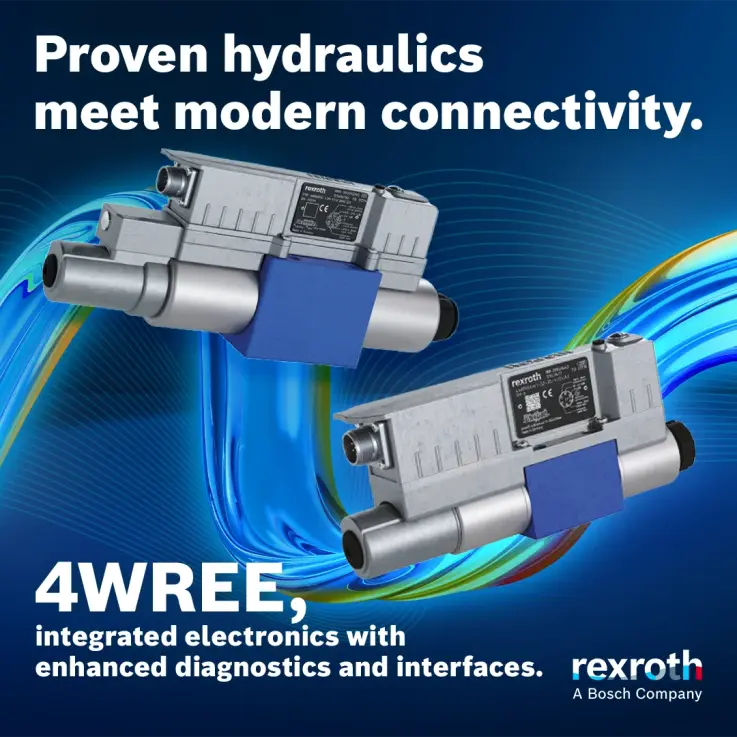
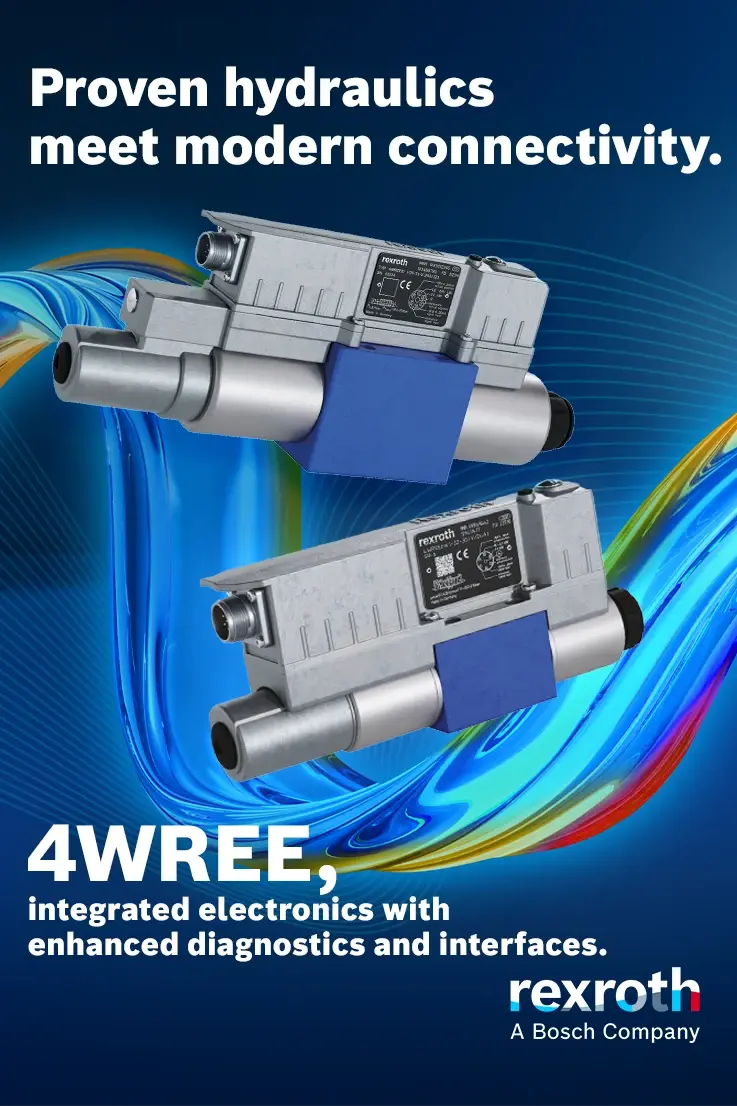
While core hydraulic and control technology remains proven through field validation, current 4WREE generations incorporate electronics addressing contemporary integration needs:
Modern communication interfaces handle digital protocols increasingly standard in industrial and mobile equipment without requiring external conversion modules.
Enhanced diagnostics provide detailed status data expected in monitored systems pursuing predictive maintenance strategies.
Updated power electronics improve efficiency while maintaining robust protection against electrical transients common in machinery environments.
The valve integrates with modern control systems while maintaining the core performance characteristics that made it an industry standard in the first place.
Common Applications Prove Versatile Design
Certain valve families dominate specific applications not through aggressive marketing but through proven performance that speaks for itself. The 4WREE appears consistently in:
This application diversity demonstrates adaptable technology—one valve architecture successfully addressing widely different requirements through configuration rather than requiring custom engineering for each use case.
Easy to Apply Means Predictable Projects
"Easy to apply" in hydraulics doesn't mean simple or basic. It means:
The 4WREE provides all four. Selection criteria are clear. Installation follows straightforward procedures. Commissioning proceeds through logical sequences. When issues arise, diagnostics point toward specific causes with defined remedies.
For equipment manufacturers managing multiple concurrent projects, this predictability matters as much as peak technical performance.
When "Frequently Desired" Actually Means "Frequently Right"
Components become industry standards by solving common problems reliably across diverse applications. The 4WREE's popularity reflects practical advantages that matter in real operations:
Specifications matching reality across production quantities, not just prototype samples
Support and documentation remaining accessible throughout equipment lifecycles measured in years
Parts availability that doesn't create supply chain emergencies during maintenance windows
Application knowledge accumulated through millions of installations available when you need help
These aren't exciting marketing claims. They're practical advantages that matter when production schedules, quality targets, and maintenance budgets depend on hydraulic systems working as designed rather than requiring constant attention.
Need proportional control that simply works? Contact Bosch Rexroth to discuss your application requirements and explore 4WREE configuration options matched to your specific needs.